
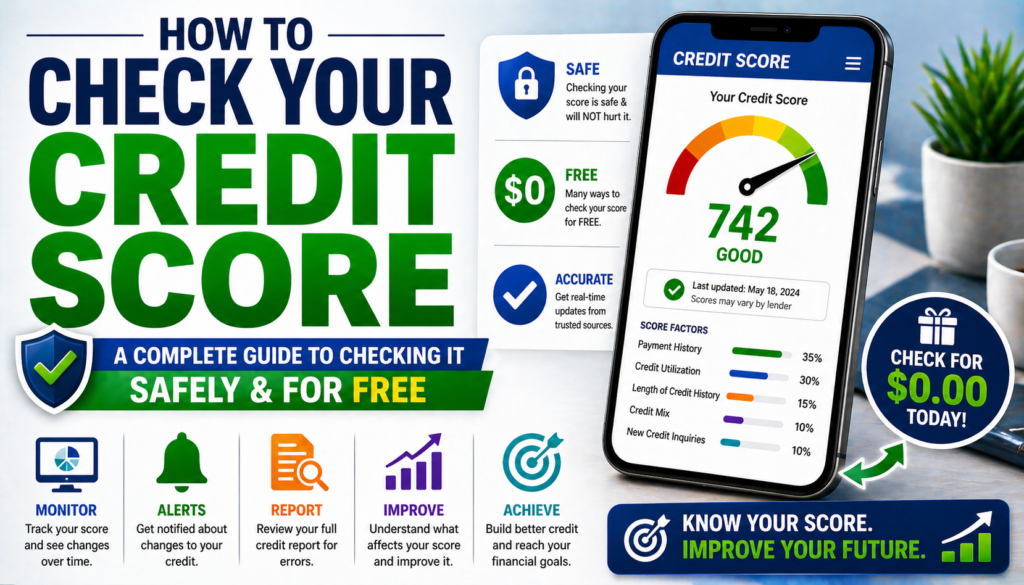
How to Check Your Credit Score: A Complete Guide to Checking It Safely and for Free
Checking your credit score is one of the most important steps you can take to understand and improve your financial health. Yet, many people either don’t check their score at all—or worse, they pay for something they could access for free.
In my experience helping people manage their credit, one of the most common mistakes is assuming that checking your credit score is complicated or expensive. The reality is that it’s easier than ever—and in most cases, completely free.
This guide explains exactly how to check your credit score, where to do it safely, and what to avoid.
What Is a Credit Score and Why It Matters
Your credit score is a number that represents your creditworthiness, meaning how likely you are to repay borrowed money.
Lenders use your credit score to decide:
- whether to approve you for loans or credit cards
- what interest rate to offer
- how much credit to extend
A higher score generally means:
- better approval chances
- lower interest rates
- more financial opportunities
Is It Safe to Check Your Credit Score?
Yes—checking your own credit score is completely safe.
👉 Important:
- it does not affect your credit score
- it is considered a soft inquiry
In my experience, many people avoid checking their score because they think it will lower it—but this is a myth.
How to Check Your Credit Score for Free
There are several ways to check your credit score without paying.
1. Use Credit Bureau Services
The most reliable way is through major credit bureaus.
They provide:
- accurate credit reports
- updated scores
- monitoring tools
These services are often free or offer free basic access.
2. Use Your Bank or Credit Card Provider
Many banks now offer free credit score access to their customers.
Benefits include:
- regular updates
- easy access through apps
- no extra cost
In my experience, this is one of the easiest and most convenient ways to track your credit.
3. Use Free Credit Monitoring Tools
There are platforms that provide free credit score tracking.
They typically offer:
- score updates
- alerts for changes
- credit insights
👉 Just make sure the platform is legitimate and secure.
What to Avoid When Checking Your Credit Score
Not all services are equal.
Paying for Basic Access
Many people pay for credit scores unnecessarily.
In most cases, you can check your score for free.
Using Unverified Websites
Some sites may:
- collect your personal data
- offer inaccurate scores
Always use trusted platforms.
Confusing Credit Score With Credit Report
Your credit score is a number, while your credit report contains detailed information.
You need both to fully understand your credit.
How Often Should You Check Your Credit Score?
Checking your score regularly is important.
Recommended frequency:
- once a month → ideal
- before applying for credit → essential
- after major financial changes → recommended
In my experience, people who monitor their credit regularly are much more successful at improving it.
What Information You Need to Check Your Credit Score
To access your credit score, you typically need:
- full name
- date of birth
- address history
- identification details
This helps verify your identity and protect your data.
What to Look for When Checking Your Credit Score
Checking your score is not enough—you need to understand it.
Score Range
Know where you stand:
| Range | Rating |
|---|---|
| 300–579 | Poor |
| 580–669 | Fair |
| 670–739 | Good |
| 740–799 | Very Good |
| 800+ | Excellent |
Changes Over Time
Look for trends:
- is your score improving?
- did it drop recently?
Negative Items
Check for:
- late payments
- collections
- errors
In my experience, identifying problems early is key to fixing them quickly.
Common Mistakes When Checking Your Credit Score
Avoid these common errors:
Checking Only Once
Your score changes over time—you need to monitor it regularly.
Ignoring Your Credit Report
The score alone doesn’t tell the full story.
Panicking Over Small Changes
Small fluctuations are normal.
Not Taking Action
Checking your score is only useful if you act on the information.
Expert Tips to Monitor Your Credit Effectively
If you want to get the most out of checking your credit score:
Check Monthly
Stay consistent.
Track Patterns
Focus on long-term trends, not daily changes.
Set Alerts
Use monitoring tools to stay informed.
Review Before Applying for Credit
This helps you prepare and improve approval chances.
From my experience, people who actively monitor and understand their credit are able to improve it much faster than those who ignore it.
How Checking Your Credit Score Helps You Improve It
Checking your score gives you:
- awareness of your financial position
- insight into what needs improvement
- motivation to maintain good habits
It also helps you:
- detect fraud early
- identify reporting errors
- track progress over time
Conclusion
Checking your credit score is simple, safe, and often free—and it’s one of the most powerful tools for managing your financial future.
The key takeaways:
- checking your score does not hurt it
- you can access it for free through multiple sources
- regular monitoring helps you improve faster
Once you make it a habit, you gain control over your credit and can make smarter financial decisions.
FAQs
Does checking your credit score lower it?
No. Checking your own score does not affect it.
Where can I check my credit score for free?
You can check it through credit bureaus, banks, and free monitoring services.
How often should I check my credit score?
At least once a month is recommended.
Is my credit score always the same?
No. It changes as new information is added to your credit report.