
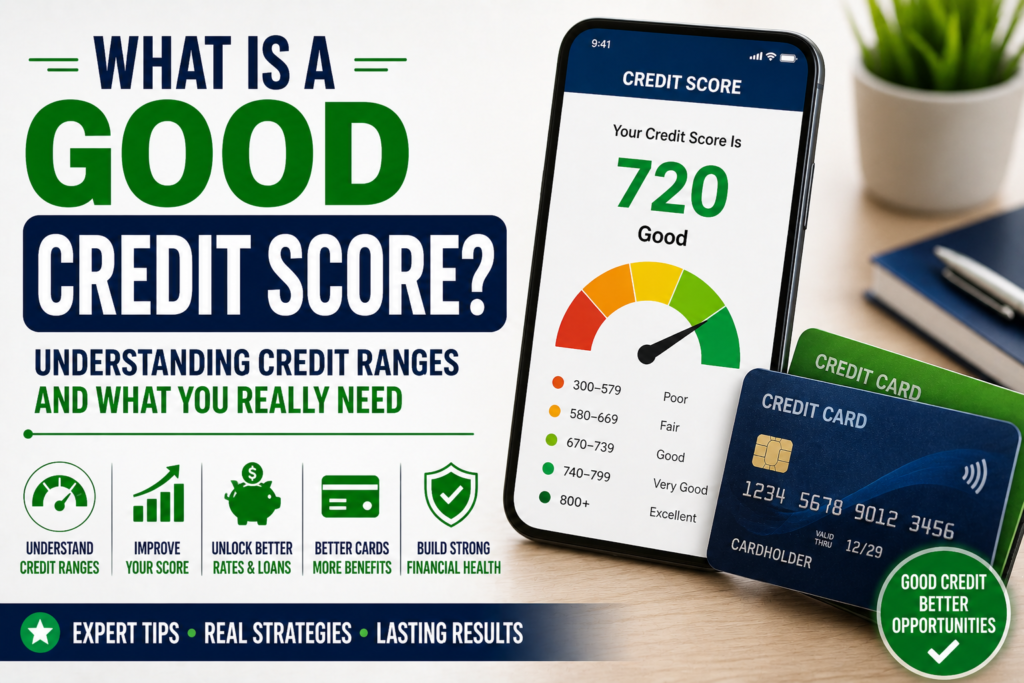
What Is a Good Credit Score? Understanding Credit Ranges and What You Really Need
If you’ve ever checked your credit score, you’ve probably wondered: Is this good or bad?
The answer isn’t always as simple as a number. A “good” credit score depends on how lenders evaluate risk—and what you want to achieve financially.
In my experience helping people understand and improve their credit, one of the biggest misconceptions is that you need a perfect score (like 800+) to succeed. In reality, you can access most financial benefits with a much lower score than people think.
What Is Considered a Good Credit Score?
Credit scores are typically grouped into ranges. While exact numbers may vary slightly depending on the scoring model, the general classification looks like this:
| Credit Score | Rating |
|---|---|
| 300–579 | Poor |
| 580–669 | Fair |
| 670–739 | Good |
| 740–799 | Very Good |
| 800+ | Excellent |
👉 A good credit score is generally considered to be 670 or higher.
Why a “Good” Credit Score Matters
Having a good credit score can unlock major financial advantages.
Benefits include:
- easier loan and credit card approvals
- lower interest rates
- higher credit limits
- better financial opportunities
In my experience, the difference between a fair score and a good score can mean thousands saved in interest over time.
Do You Really Need an Excellent Credit Score?
This is where most people get it wrong.
Many believe they need a score above 800 to qualify for the best deals—but that’s not true.
Reality:
- most lenders offer top rates starting around 700–740
- going from 740 to 800 often provides minimal additional benefits
👉 In my experience, once someone reaches the “good” or “very good” range, the focus should shift from chasing perfection to maintaining stability.
What Credit Score Do You Need for Different Goals?
Different financial goals require different score levels.
For Credit Cards
- Fair (580+) → basic approval possible
- Good (670+) → better options
- Very Good (740+) → rewards cards
For Loans
- Fair → higher interest rates
- Good → standard rates
- Very Good+ → best rates
For Mortgages
- 620+ → minimum for many lenders
- 700+ → better terms
- 740+ → best interest rates
In my experience, aiming for 700+ is the sweet spot for most people.
What Affects Whether Your Score Is “Good”
Your credit score is calculated based on several factors.
Key components:
- payment history (35%)
- credit utilization (30%)
- length of credit history (15%)
- credit mix (10%)
- new inquiries (10%)
👉 Payment history and utilization alone make up 65% of your score.
How to Move From Fair to Good Credit
If your score is below 670, improving it to “good” is one of the most valuable financial steps you can take.
1. Pay All Bills on Time
This is the most important factor.
Even one missed payment can significantly lower your score.
2. Lower Your Credit Utilization
Keep your usage:
- below 30% → good
- below 10% → ideal
In my experience, this is the fastest way to improve your score.
3. Avoid Too Many Applications
Each credit application creates a hard inquiry.
Too many can temporarily lower your score.
4. Keep Old Accounts Open
Older accounts help increase your credit history length.
5. Monitor Your Credit Regularly
Tracking your score helps you:
- detect errors
- measure progress
- stay motivated
Common Mistakes About Credit Scores
Avoid these misconceptions:
Thinking You Need a Perfect Score
You don’t need 800+ to get great financial products.
Ignoring Credit Utilization
Many people pay on time but still have low scores due to high balances.
Closing Old Credit Cards
This can reduce your credit history and hurt your score.
Focusing Only on the Score
Your credit report details matter just as much.
In my experience, understanding how the system works is more important than chasing a specific number.
How Long Does It Take to Reach a Good Credit Score?
The timeline depends on your starting point.
Typical estimates:
| Starting Point | Time to Reach “Good” |
|---|---|
| Poor | 6–12 months |
| Fair | 3–6 months |
| No credit | 6+ months |
Consistency is key.
Real Example: Improving to a Good Credit Score
Let’s say someone has:
- score: 620 (fair)
- high credit card balances
Actions taken:
- reduced utilization below 30%
- paid on time consistently
Result:
- score increased to 680–700 within a few months
This is one of the most common improvements I’ve seen.
Expert Strategy: The Ideal Target Score
Instead of aiming for perfection, focus on these milestones:
- 670 → good (minimum target)
- 700 → strong position
- 740+ → optimal
👉 In my experience, 700–740 is the most practical target range.
Conclusion
A good credit score is not about perfection—it’s about reaching a level that gives you access to better financial opportunities.
The key takeaways:
- a good score starts around 670
- you don’t need 800+ to succeed
- payment history and utilization matter most
- consistent habits lead to long-term results
Once you reach a good score, maintaining it becomes much easier—and far more valuable than chasing small increases.
FAQs
What is the minimum good credit score?
A score of 670 or higher is generally considered good.
Is 700 a good credit score?
Yes. A score of 700 is solid and qualifies for many financial products.
Can I get approved with a fair credit score?
Yes, but with higher interest rates and fewer options.
What is an excellent credit score?
Typically 800 or above, though it’s not necessary for most benefits.