
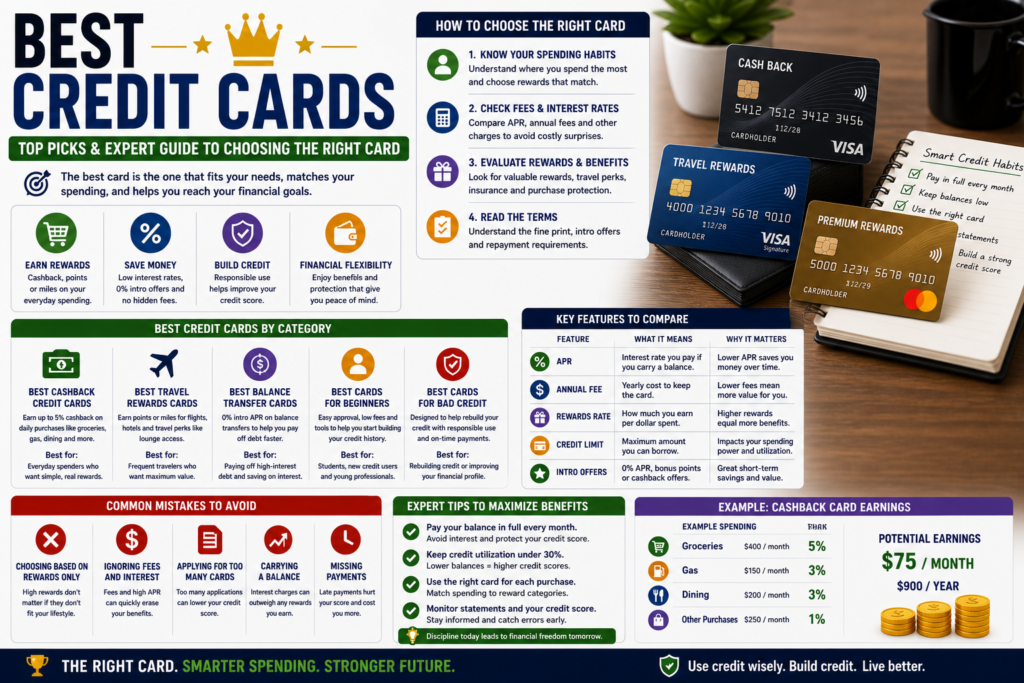
Best Credit Cards: Top Picks and Expert Guide to Choosing the Right Card
Choosing the best credit card can significantly impact your finances, whether you’re looking to earn rewards, save on interest, or build your credit history.
With so many options available, finding the right card depends on your financial goals and spending habits. Some cards offer cashback, others focus on travel rewards, while some are designed for beginners or people with bad credit.
In my experience analyzing credit cards and helping people choose the right one, the biggest mistake is picking a card based on marketing instead of how they actually use it daily.
What Are the Best Credit Cards?
The best credit cards are those that align with your financial behavior and goals, not just the ones with the highest rewards.
A good credit card should offer:
- competitive interest rates (APR)
- low or no annual fees
- valuable rewards or benefits
- flexible repayment options
Different users benefit from different types of cards. For example:
- frequent travelers benefit from travel rewards cards
- everyday spenders benefit from cashback cards
- beginners benefit from simple, low-fee cards
There is no universal “best card”—only the best one for your situation.
How to Choose the Best Credit Card for You
Before applying for any credit card, it’s important to evaluate your needs.
Consider Your Spending Habits
Ask yourself:
- Do you spend more on groceries, travel, or online shopping?
- Do you carry a balance or pay in full each month?
Your answers determine which card will benefit you most.
In my experience, people often choose rewards cards but fail to use them properly, which results in zero real benefit.
Check Fees and Interest Rates
Always review:
- APR (interest rate)
- annual fees
- foreign transaction fees
- late payment fees
Even a high-reward card can become expensive if the fees outweigh the benefits.
Evaluate Rewards and Benefits
Common reward structures include:
- cashback
- points
- travel miles
Choose rewards that match your lifestyle. For example:
- cashback for everyday expenses
- travel rewards for frequent flyers
Best Credit Cards by Category
Different categories serve different financial needs. Here are the most common types.
Best Cashback Credit Cards
Cashback cards return a percentage of your spending as cash rewards.
Best for:
- everyday purchases
- simple reward systems
- users who prefer direct savings
Typical cashback ranges from 1% to 5%, depending on the category.
In many cases I’ve reviewed, cashback cards provide the highest real value because they are simple and easy to use.
Best Rewards Credit Cards
Rewards cards offer points or miles that can be redeemed for:
- travel
- shopping
- gift cards
Best for:
- frequent travelers
- high spenders
- users who maximize reward systems
However, rewards cards require more strategy to fully benefit.
Best Balance Transfer Credit Cards
These cards allow you to transfer existing debt and pay 0% interest for a limited period.
Best for:
- paying off high-interest debt
- consolidating balances
- saving on interest
One of the smartest strategies I recommend is using a balance transfer card to eliminate debt faster without accumulating interest.
Best Credit Cards for Beginners
Beginner-friendly cards are designed for people with little or no credit history.
Features include:
- lower credit limits
- simple approval requirements
- fewer fees
These cards are ideal for building credit safely.
Best Credit Cards for Bad Credit
Cards for bad credit are designed to help rebuild your credit profile.
Options include:
- secured credit cards
- credit builder cards
- subprime cards
Used correctly, these cards can help improve your credit score within a few months.
Key Features to Compare
When choosing between credit cards, focus on these critical factors:
| Feature | Why It Matters |
|---|---|
| APR | Determines cost if you carry a balance |
| Annual fee | Affects total cost of the card |
| Rewards rate | Determines earning potential |
| Credit limit | Impacts spending flexibility |
| Intro offers | Provides short-term value |
In my experience, most people overlook the APR, but it becomes crucial if you don’t pay your balance in full.
Common Mistakes When Choosing a Credit Card
Avoid these frequent mistakes:
Choosing Based on Rewards Alone
High rewards don’t matter if you don’t use them.
Ignoring Fees
Annual fees and hidden charges can reduce benefits.
Applying for Too Many Cards
Multiple applications can negatively impact your credit score.
Carrying a Balance
Interest charges can quickly outweigh rewards.
One of the most common issues I see is people chasing rewards while accumulating debt, which defeats the purpose of using a credit card.
Expert Tips to Maximize Credit Card Benefits
To get the most out of your credit card:
Pay Your Balance in Full
Avoid interest charges and maximize rewards.
Keep Credit Utilization Low
Use less than 30% of your credit limit.
Use the Right Card for Each Purchase
Match your spending to reward categories.
Monitor Your Statements
Track spending and detect errors early.
From my experience, the users who benefit the most from credit cards are those who treat them as a financial tool, not extra income.
Conclusion
The best credit cards are those that align with your financial habits, goals, and credit profile.
Whether you’re looking for cashback, travel rewards, or a way to build your credit, choosing the right card can provide long-term financial benefits.
By understanding how different cards work and using them responsibly, you can maximize rewards while maintaining a strong credit profile.
FAQs
What is the best credit card overall?
There is no single best card. The best option depends on your spending habits and financial goals.
Which credit card is best for beginners?
Beginner-friendly cards with low fees and simple approval requirements are the best starting point.
Are cashback cards better than rewards cards?
Cashback cards are simpler and often more practical, while rewards cards offer more value for frequent travelers.
Should I get a credit card with no annual fee?
If you want to minimize costs, no annual fee cards are a good option, especially for everyday use.