
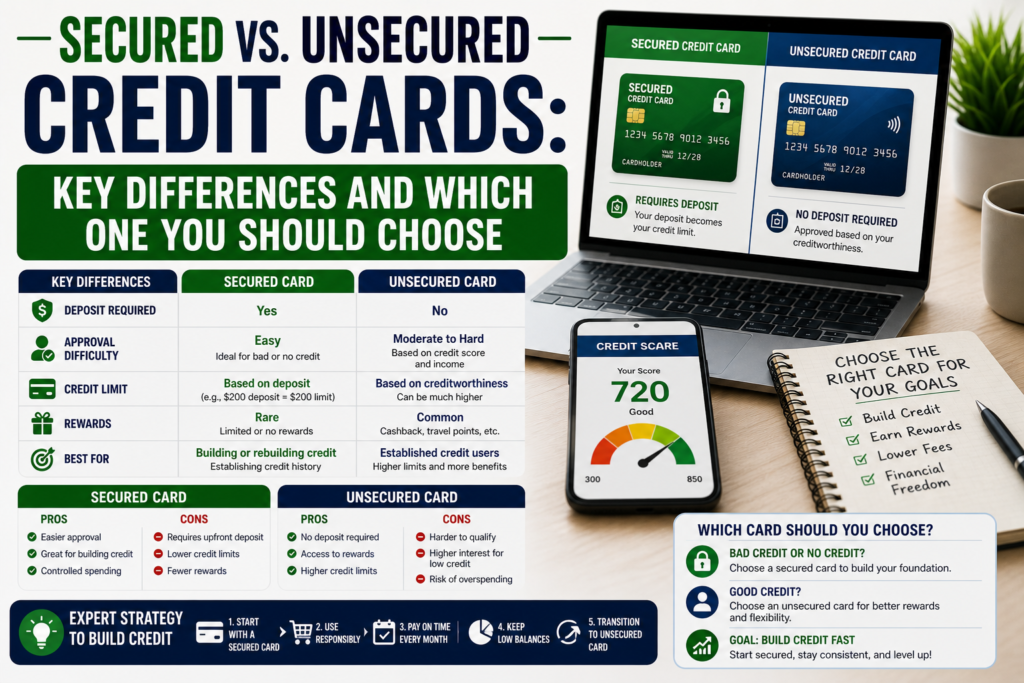
Secured vs Unsecured Credit Cards: Key Differences and Which One You Should Choose
Choosing between a secured and an unsecured credit card can be confusing, especially if you’re trying to build or rebuild your credit. Both types of cards serve different purposes, and understanding how they work can help you make the right financial decision.
In my experience helping people improve their credit, the biggest mistake is choosing the wrong type of card for their situation. The right strategy can accelerate your credit growth, while the wrong one can slow you down.
What Is a Secured Credit Card?
A secured credit card requires a refundable security deposit, which acts as collateral for the lender.
Example:
| Security Deposit | Credit Limit |
|---|---|
| $200 | $200 |
| $500 | $500 |
Because the lender has reduced risk, secured cards are:
- easier to get approved for
- ideal for bad or no credit
- designed to build credit
Most secured cards report to major credit bureaus, helping you establish a positive payment history.
In my experience, secured cards are often the fastest and safest way to start rebuilding credit.
What Is an Unsecured Credit Card?
An unsecured credit card does not require a deposit.
Instead, approval is based on your:
- credit score
- income
- financial history
These cards are what most people think of as “normal” credit cards.
They typically offer:
- higher credit limits
- rewards (cashback, travel points)
- lower fees (for good credit users)
However, they are harder to obtain if your credit score is low.
Key Differences Between Secured and Unsecured Credit Cards
Here’s a clear comparison:
| Feature | Secured Card | Unsecured Card |
|---|---|---|
| Deposit required | Yes | No |
| Approval difficulty | Easy | Moderate to hard |
| Credit limit | Based on deposit | Based on creditworthiness |
| Rewards | Rare | Common |
| Best for | Building credit | Established credit users |
Pros and Cons of Each Type
Secured Credit Cards
Pros
- easier approval
- great for building credit
- controlled spending
Cons
- requires upfront deposit
- lower limits
- fewer rewards
Unsecured Credit Cards
Pros
- no deposit required
- access to rewards
- higher limits
Cons
- harder to qualify
- higher interest for low credit users
- potential for overspending
Which One Is Better for You?
The best option depends on your situation.
For Bad Credit
👉 Secured credit cards are the best choice
They allow you to:
- rebuild credit safely
- establish payment history
- improve approval chances later
In my experience, starting with a secured card is the most reliable way to recover from poor credit.
For Beginners (No Credit History)
👉 Secured cards are usually the safest starting point
They help you:
- build your first credit profile
- learn responsible usage
For Good Credit
👉 Unsecured cards are the better option
They offer:
- rewards
- better terms
- higher limits
How to Transition From Secured to Unsecured Cards
One of the smartest strategies is using a secured card as a stepping stone.
Step-by-step strategy:
- Open a secured credit card
- Use it for small purchases
- Pay in full every month
- Keep utilization low
- Wait 6–12 months
Many lenders will:
- upgrade your card automatically
- return your deposit
- increase your credit limit
I’ve seen many cases where people successfully transition to unsecured cards within a year using this method.
Common Mistakes to Avoid
Avoid these common pitfalls:
Closing the Secured Card Too Early
Keeping the account open helps build credit history.
Missing Payments
Late payments can damage your credit progress.
Using Too Much Credit
High utilization negatively impacts your score.
Applying Too Early for Unsecured Cards
This can lead to rejections and unnecessary credit checks.
In my experience, patience and consistency are the keys to success.
Expert Strategy to Build Credit Faster
If your goal is to improve your credit quickly, follow this strategy:
1. Start With a Secured Card
Build your foundation safely.
2. Keep Utilization Below 30%
Ideally under 10%.
3. Pay On Time Every Month
This has the biggest impact on your score.
4. Transition to Unsecured Cards
Once your score improves.
5. Maintain Good Habits
Consistency is what drives long-term results.
From what I’ve seen, people who follow this approach often see noticeable improvements within 3–6 months.
Conclusion
Secured and unsecured credit cards serve different purposes, and choosing the right one depends on your credit profile.
- Secured cards are ideal for building or rebuilding credit
- Unsecured cards are better for those with established credit
By understanding how each works and using them strategically, you can build a strong credit profile and unlock better financial opportunities.
FAQs
Is a secured card better than an unsecured card?
It depends. Secured cards are better for building credit, while unsecured cards are better for rewards and flexibility.
Can a secured card become unsecured?
Yes. Many lenders upgrade secured cards after consistent on-time payments.
Which is easier to get approved for?
Secured credit cards are much easier to obtain.
Do secured cards build credit faster?
They can, especially for people starting from low or no credit.