
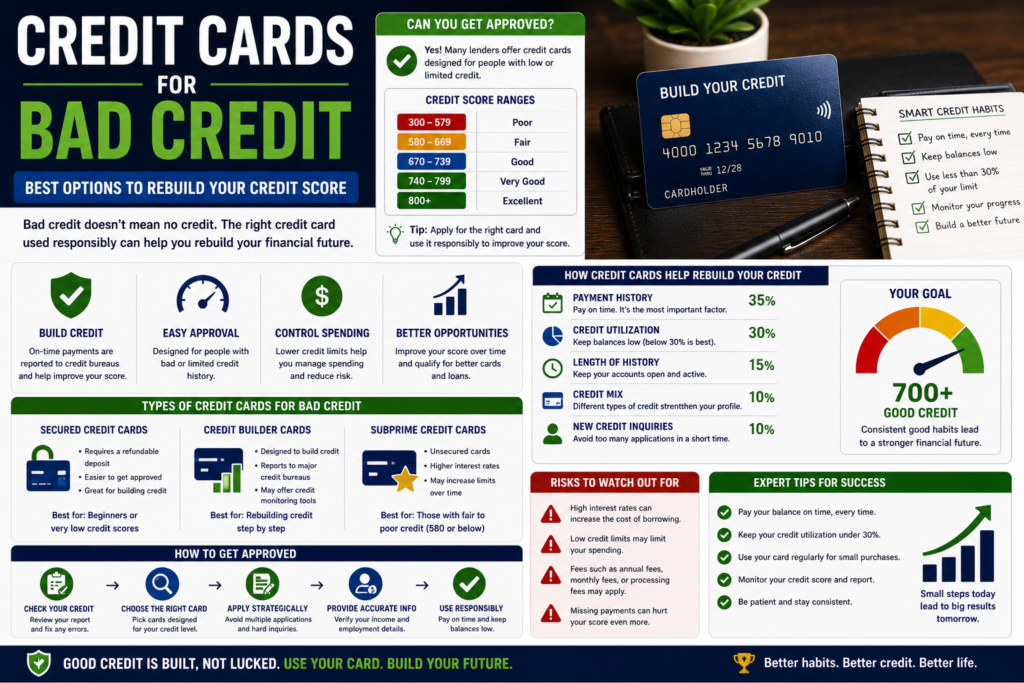
Credit Cards for Bad Credit: Best Options to Rebuild Your Credit Score
Getting approved for a credit card with bad credit may seem difficult, but it’s far from impossible. Many financial institutions offer credit cards specifically designed for people with low credit scores or limited credit history.
These cards can help you rebuild your financial profile if they are used responsibly. By making payments on time and keeping balances low, you can gradually improve your credit score and regain access to better financial opportunities.
In my experience helping people recover from poor credit, many believe they cannot qualify for any credit card at all. The reality is that there are several credit card options designed specifically to help rebuild credit when used correctly.
What Are Credit Cards for Bad Credit?
Credit cards for bad credit are financial products created for borrowers who have low credit scores or past credit problems such as missed payments, defaults, or collections.
Because these borrowers represent a higher risk for lenders, these cards typically include:
- lower credit limits
- higher interest rates
- stricter approval requirements
However, they also provide an opportunity to rebuild credit history through responsible use.
When lenders evaluate applications for these cards, they may consider factors beyond your credit score, such as:
- employment status
- income stability
- existing debt levels
- banking history
Many people assume a low credit score automatically disqualifies them, but in reality lenders often focus on current financial behavior rather than past mistakes.
Can You Get a Credit Card With a Low Credit Score?
Yes, it is possible to get approved for a credit card even with poor credit.
Many lenders specialize in credit cards designed for individuals with scores below traditional approval thresholds.
Typical credit score ranges include:
| Credit Score | Rating |
|---|---|
| 300–579 | Poor |
| 580–669 | Fair |
| 670–739 | Good |
| 740–799 | Very Good |
| 800+ | Excellent |
Borrowers with scores below 600 may still qualify for certain credit cards created specifically for rebuilding credit.
In my experience reviewing credit applications, one of the most common mistakes people make is applying for multiple cards at the same time. Each application can trigger a hard credit inquiry, which may temporarily reduce your score.
Instead, it’s better to research cards designed for your credit profile before applying.
Types of Credit Cards for Bad Credit
There are several types of credit cards designed to help borrowers with poor credit rebuild their financial profile.
Understanding how each option works can help you choose the right card.
Secured Credit Cards
Secured credit cards require a security deposit, which usually becomes your credit limit.
For example:
- deposit $300
- receive a $300 credit limit
Because the lender holds collateral, approval rates are typically higher for people with bad credit.
Benefits include:
- easier approval
- controlled spending limits
- opportunity to build payment history
If used responsibly, secured cards can help rebuild credit within a few months.
Credit Builder Cards
Credit builder cards are specifically designed to help people improve their credit score over time.
These cards typically include:
- lower credit limits
- credit monitoring tools
- reporting to credit bureaus
By using the card for small purchases and paying the balance on time, borrowers can gradually strengthen their credit profile.
In my experience advising borrowers trying to rebuild credit, consistent payments are the single most important factor for improving credit scores.
Subprime Credit Cards
Subprime credit cards are unsecured cards available to borrowers with lower credit scores.
They usually offer:
- small starting limits
- higher interest rates
- potential credit limit increases over time
If the account is managed responsibly, some lenders may gradually increase the credit limit after several months of on-time payments.
How to Get Approved for a Credit Card With Bad Credit
Although credit cards for bad credit are easier to obtain than traditional cards, approval still depends on several factors.
Following these strategies can increase your chances of approval.
Check Your Credit Score First
Before applying, review your credit report to understand your financial standing.
Look for:
- incorrect late payments
- duplicate accounts
- debts that do not belong to you
Correcting inaccurate information can sometimes improve your score quickly.
I have seen cases where fixing a reporting error improved a credit score by 50 points or more.
Apply for the Right Card
Not all credit cards are designed for people with bad credit.
Applying for cards that require higher credit scores can result in unnecessary rejections and additional credit inquiries.
Focus on:
- secured cards
- credit builder cards
- cards designed for fair or poor credit
Avoid Too Many Applications
Submitting multiple credit card applications within a short period can harm your credit score.
Each application generates a hard inquiry, which signals potential financial risk to lenders.
A better strategy is to research one or two suitable cards and apply selectively.
How Credit Cards Can Help Rebuild Your Credit
Using a credit card responsibly can gradually improve your credit score.
Credit scores are influenced by several factors:
| Factor | Impact |
|---|---|
| Payment history | 35% |
| Credit utilization | 30% |
| Credit history length | 15% |
| Credit mix | 10% |
| New credit inquiries | 10% |
To improve your credit score:
- always pay on time
- keep balances low
- avoid maxing out your card
In many situations I’ve reviewed, people begin seeing noticeable credit score improvements within three to six months of responsible card use.
Risks of Credit Cards for Bad Credit
Although these cards can help rebuild credit, they also come with potential risks.
High Interest Rates
Credit cards for bad credit often have higher interest rates than standard cards.
Low Credit Limits
Lower limits may restrict spending but can also help prevent excessive debt.
Additional Fees
Some cards include annual fees, monthly fees, or processing charges.
Borrowers should carefully review all terms and conditions before applying.
Expert Tips for Using Your Card Responsibly
If you want to rebuild your credit effectively, following these habits is essential.
Pay Your Balance on Time
Late payments can damage your credit score and delay recovery.
Keep Your Utilization Low
Experts recommend using less than 30% of your available credit.
Use Your Card Regularly
Small purchases paid off each month demonstrate responsible credit use.
Monitor Your Credit Progress
Regularly checking your credit score helps track improvements and detect errors.
In my experience helping borrowers rebuild their credit, those who follow these simple habits often achieve the fastest results.
Conclusion
Credit cards for bad credit provide an opportunity to rebuild your financial reputation and improve your credit score over time.
Although these cards may come with higher interest rates and lower limits, responsible use can help establish positive payment history and strengthen your credit profile.
By choosing the right card, using it carefully, and maintaining consistent payment habits, you can gradually move toward better financial opportunities and access to higher-quality credit products.
FAQs
What credit score is considered bad?
Credit scores below 580 are generally considered poor by most lenders.
Can I get a credit card with a 500 credit score?
Yes. Some lenders offer secured or subprime credit cards designed for people with scores around 500.
What is the easiest credit card to get with bad credit?
Secured credit cards are usually the easiest to obtain because they require a refundable deposit.
Do credit cards help rebuild credit?
Yes. Making consistent on-time payments and keeping balances low can improve your credit score over time.