
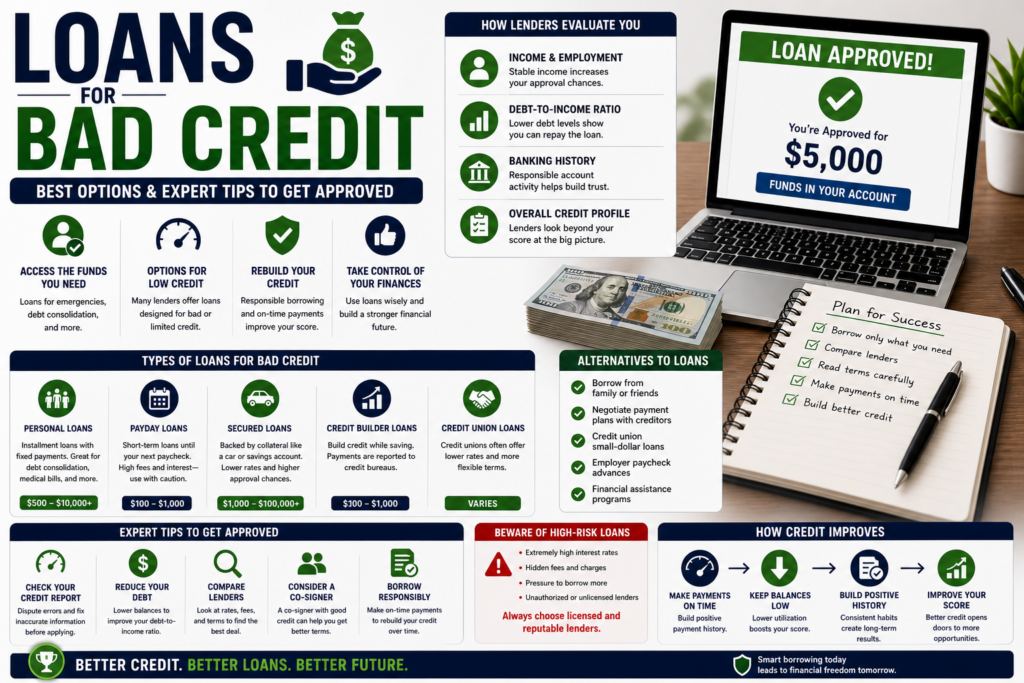
Loans for Bad Credit: Best Options and Expert Tips to Get Approved
Getting approved for a loan with bad credit can feel difficult, but it’s far from impossible. Many lenders today offer financial products designed specifically for people with low credit scores or limited credit history.
Loans for bad credit can help cover emergencies, consolidate debt, or rebuild your financial profile when used responsibly. However, understanding the different types of loans and how lenders evaluate applications is essential before applying.
In my experience working with people who have damaged credit, many believe they have no borrowing options left. In reality, there are several legitimate lending solutions available—if you know where to look and how to apply strategically.
What Are Loans for Bad Credit?
Loans for bad credit are financial products designed for borrowers with low credit scores or past credit issues, such as late payments, collections, or defaults.
Because these borrowers represent higher risk for lenders, bad credit loans typically come with:
- Higher interest rates
- Lower borrowing limits
- Stricter repayment terms
Despite these conditions, they can provide access to funds when traditional banks decline applications.
Some lenders focus specifically on borrowers with credit scores below typical approval thresholds. These lenders evaluate additional factors such as:
- income stability
- employment history
- debt-to-income ratio
- banking activity
When I advise borrowers with poor credit, I often explain that lenders care less about past mistakes and more about whether you can repay the loan today.
Can You Get a Loan With a Low Credit Score?
Yes, it is possible to get approved for a loan even with a low credit score.
Many lenders specialize in working with borrowers whose credit scores fall below the standard lending range.
Typical credit score ranges:
| Credit Score | Rating |
|---|---|
| 300–579 | Poor |
| 580–669 | Fair |
| 670–739 | Good |
| 740–799 | Very Good |
| 800+ | Excellent |
Borrowers with scores under 600 may still qualify for certain types of loans, especially through online lenders or alternative financial services.
In my experience reviewing loan applications, one of the most common mistakes people make is applying to multiple lenders at once. Too many credit checks can lower your score further and reduce approval chances.
Instead, it’s better to research lenders that specifically advertise loans for bad credit.
Types of Loans for Bad Credit
Several loan types are available for people with low credit scores. Each option has different requirements, risks, and benefits.
Personal Loans for Bad Credit
Bad credit personal loans are installment loans that allow borrowers to receive a lump sum and repay it in monthly payments.
Common features include:
- fixed monthly payments
- loan terms from 12–60 months
- amounts ranging from $500 to $10,000 or more
These loans are often used for:
- medical bills
- emergency expenses
- debt consolidation
From what I’ve seen helping borrowers compare lenders, online personal loans often offer more flexible approval criteria than traditional banks.
Payday Loans
Payday loans are short-term loans designed to cover expenses until your next paycheck.
They usually offer:
- small loan amounts
- extremely short repayment periods
- very high interest rates
While payday loans may provide fast access to cash, they can also lead to debt cycles if not managed carefully.
In my professional experience advising borrowers, payday loans should only be considered as a last resort because their costs can escalate quickly.
Secured Loans
Secured loans require collateral such as:
- a vehicle
- savings account
- property
Because the lender has security, approval rates tend to be higher for borrowers with poor credit.
Benefits include:
- lower interest rates
- higher loan amounts
- easier approval
However, failing to repay a secured loan could result in losing the asset used as collateral.
Credit Builder Loans
Credit builder loans are designed specifically to help borrowers improve their credit score.
Instead of receiving the money immediately, the funds are held in a savings account while the borrower makes monthly payments.
Once the loan is paid off, the borrower receives the funds.
These loans help build positive payment history, which is one of the most important factors affecting credit scores.
How to Get Approved for a Bad Credit Loan
Although bad credit loans are accessible, lenders still evaluate several factors before approving applications.
Following these steps can significantly increase your chances of approval.
Check Your Credit Score
Before applying, review your credit report to understand your financial profile.
Look for:
- errors in reporting
- outdated debts
- fraudulent accounts
Correcting inaccurate information can sometimes improve your score quickly.
In some cases I’ve seen, disputing just one incorrect account has increased a credit score by 40–60 points.
Compare Multiple Lenders
Interest rates and loan conditions can vary significantly between lenders.
Important factors to compare include:
- APR (annual percentage rate)
- repayment terms
- fees and penalties
- eligibility requirements
Comparing lenders allows you to find the most affordable option.
Reduce Existing Debt
Lowering your debt balance improves your debt-to-income ratio, which lenders evaluate when reviewing applications.
If possible, try to:
- pay down credit card balances
- close small debts
- consolidate multiple accounts
Lower debt levels can increase your chances of loan approval.
Consider a Co-Signer
A co-signer is someone who agrees to repay the loan if you cannot.
Having a co-signer with strong credit can significantly improve:
- approval chances
- interest rates
- borrowing limits
However, this arrangement requires trust because both parties become responsible for the loan.
Best Alternatives to Bad Credit Loans
Sometimes a loan may not be the best option. Alternative financial solutions may offer safer or cheaper solutions.
Possible alternatives include:
- borrowing from family or friends
- negotiating payment plans with creditors
- credit union small-dollar loans
- paycheck advances from employers
- financial assistance programs
In many situations I’ve reviewed, borrowers discover that negotiating directly with creditors can eliminate the need for a high-interest loan.
Risks of Bad Credit Loans
While these loans can provide access to funds, they also carry risks that borrowers should understand.
Common risks include:
High Interest Rates
Bad credit loans often have higher APRs because lenders assume greater risk.
Short Repayment Terms
Some lenders require repayment within a short period, which can create financial pressure.
Predatory Lending
Certain lenders use misleading advertising or hidden fees.
Borrowers should always verify that lenders are licensed and transparent about fees.
Expert Tips Before Applying
Before applying for a loan with bad credit, consider these expert recommendations.
Borrow Only What You Need
Smaller loans are easier to repay and less risky financially.
Read Loan Agreements Carefully
Always review interest rates, fees, and repayment terms before signing.
Avoid Multiple Applications
Too many credit inquiries may reduce your credit score.
Use Loans Strategically
Responsible borrowing and consistent repayment can actually help rebuild your credit profile over time.
In my experience working with borrowers recovering from financial difficulties, the people who improve their credit fastest are those who borrow cautiously and focus on repayment discipline.
Conclusion
Loans for bad credit can provide access to financial support when traditional lenders decline applications. However, choosing the right loan and understanding the associated risks is essential.
By researching lenders, comparing interest rates, and improving your financial habits, you can increase your chances of approval and avoid unnecessary debt.
With careful planning and responsible repayment, these loans can even become a stepping stone toward rebuilding a stronger credit profile.
FAQs
What credit score is considered bad?
Credit scores below 580 are generally considered poor by most lenders.
Can I get a loan with a 500 credit score?
Yes, some lenders offer loans to borrowers with scores around 500, though interest rates may be higher.
Are guaranteed loans for bad credit real?
No legitimate lender can guarantee approval without reviewing your financial information.
Do bad credit loans help improve credit scores?
Yes. If the lender reports payments to credit bureaus, making consistent on-time payments can help rebuild credit.