
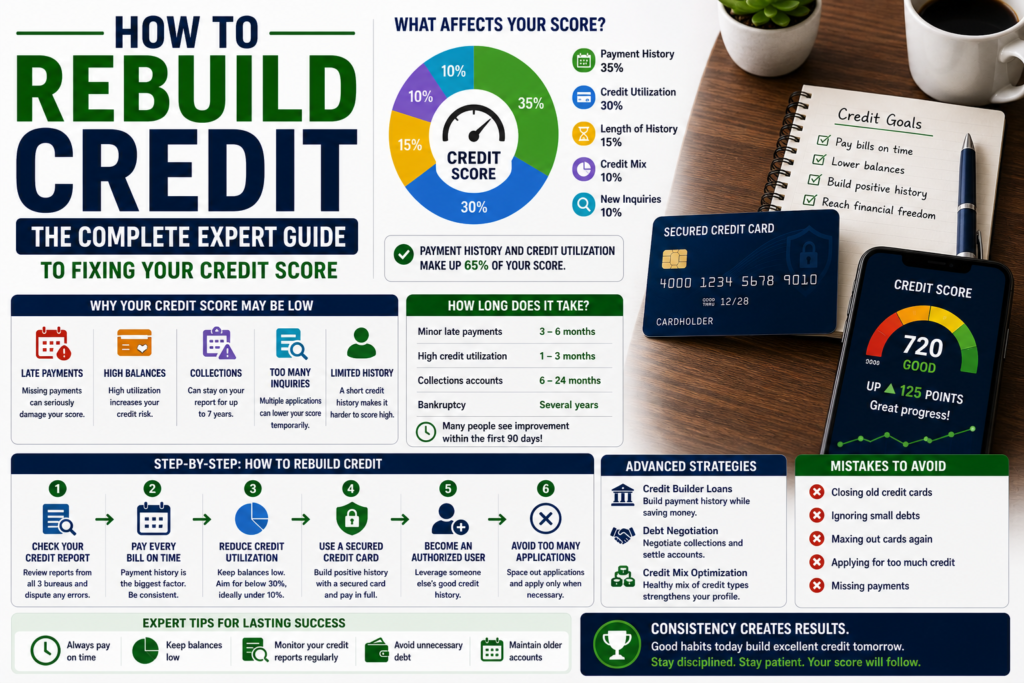
How to Rebuild Credit: The Complete Expert Guide to Fixing Your Credit Score
Rebuilding credit can feel overwhelming, especially if late payments, collections, or high debt have damaged your credit score. The good news is that credit can be rebuilt, often faster than people expect if you follow the right strategy.
In my experience working with people trying to recover from poor credit, the biggest mistake is assuming their score is permanently damaged. In reality, credit scores are dynamic and respond quickly when you start practicing the right financial habits.
This guide explains exactly how to rebuild credit step-by-step, how long it usually takes, and the strategies that make the biggest impact.
What Does It Mean to Rebuild Credit?
Rebuilding credit means improving a damaged or low credit score by establishing positive credit habits over time.
Credit scores (such as FICO) are calculated using several factors:
| Factor | Impact on Score |
|---|---|
| Payment history | 35% |
| Credit utilization | 30% |
| Length of credit history | 15% |
| Credit mix | 10% |
| New credit inquiries | 10% |
Because payment history and credit utilization make up 65% of your score, improving these two areas often produces the fastest results.
When I help someone rebuild their credit, we usually start by focusing on just these two factors first, because they deliver the biggest improvements early.
Why Your Credit Score May Be Low
Understanding the cause of bad credit makes it easier to fix.
Common reasons include:
Late Payments
Missing payments is the most damaging factor for your credit score.
Even a single payment that is 30 days late can significantly reduce your score.
High Credit Card Balances
Using too much of your available credit increases your credit utilization ratio.
Experts recommend keeping utilization below 30%, and ideally under 10%.
Collections Accounts
Accounts sent to collections can stay on your credit report for up to seven years.
Too Many Hard Inquiries
Applying for multiple loans or credit cards within a short period can temporarily lower your score.
Limited Credit History
People with little or no credit history often struggle to build a strong score.
In my experience advising clients, many people actually have several small issues combined, which makes their credit appear worse than it really is.
Step-by-Step: How to Rebuild Credit
The most effective strategy is following a structured rebuilding plan.
Step 1 — Check Your Credit Report for Errors
Start by reviewing your credit report from the three major credit bureaus:
- Experian
- Equifax
- TransUnion
Look for:
- incorrect late payments
- accounts that don’t belong to you
- duplicate debts
- outdated collections
Many people are surprised to find errors on their credit report. I’ve seen situations where correcting just one incorrect account increased a score by 50+ points.
Disputing inaccurate information can be one of the fastest ways to improve your credit.
Step 2 — Pay Every Bill on Time
Payment history has the largest impact on your credit score.
Even one missed payment can hurt your progress.
Strategies that work well include:
- setting automatic payments
- creating calendar reminders
- paying at least the minimum balance
When people start paying consistently on time, they often begin seeing improvements in 3–6 months.
Step 3 — Reduce Your Credit Utilization
Your credit utilization ratio measures how much of your available credit you’re using.
Example:
- Credit limit: $5,000
- Balance: $2,500
Utilization = 50%
To improve your score:
- pay down balances
- spread balances across cards
- request higher credit limits (carefully)
One strategy I often recommend is reducing balances below 30% first, then aiming for under 10% over time.
This alone can dramatically improve many credit scores.
Step 4 — Open a Secured Credit Card
A secured credit card is one of the best tools for rebuilding credit.
How it works:
- You deposit money (for example $300).
- That amount becomes your credit limit.
- The card reports your payments to credit bureaus.
Used responsibly, a secured card can build positive payment history quickly.
When clients consistently use secured cards correctly, they often see steady score increases within a few months.
Step 5 — Become an Authorized User
Another strategy is becoming an authorized user on someone else’s credit card.
Benefits include:
- inheriting the account’s payment history
- increasing total credit limits
- lowering credit utilization
However, the primary account holder must:
- have good credit
- pay on time
- maintain low balances
If the main account is mismanaged, it can harm your credit instead.
Step 6 — Avoid Too Many Credit Applications
Every credit application triggers a hard inquiry, which can slightly lower your score.
Applying for too many accounts quickly can signal financial risk to lenders.
Instead:
- space applications several months apart
- apply only for accounts you actually need
When rebuilding credit, patience is often more effective than opening multiple accounts.
Advanced Strategies to Rebuild Credit Faster
Once the basics are handled, additional strategies can accelerate your progress.
Credit Builder Loans
Credit builder loans are designed specifically for people with poor or limited credit.
The money is held in a savings account while you make payments. Once the loan is paid off, you receive the funds.
This helps build positive payment history.
Debt Negotiation
If you have accounts in collections, negotiating with creditors may help.
Options include:
- pay for delete agreements
- settlement payments
- payment plans
I’ve seen many cases where resolving a few collections accounts led to significant credit improvements within months.
Credit Mix Optimization
Credit scores improve when you demonstrate responsible use of different types of credit, such as:
- credit cards
- installment loans
- auto loans
You don’t need many accounts, but having a balanced mix can strengthen your profile.
How Long Does It Take to Rebuild Credit?
Credit rebuilding timelines vary depending on the damage.
Typical timelines:
| Situation | Estimated Recovery |
|---|---|
| Minor late payments | 3–6 months |
| High credit utilization | 1–3 months |
| Collections accounts | 6–24 months |
| Bankruptcy | several years |
In my experience working with credit improvement strategies, many people start seeing noticeable improvements within the first 90 days once they adopt better credit habits.
Consistency matters more than speed.
Mistakes That Can Ruin Your Credit Recovery
Avoid these common mistakes:
Closing Old Credit Cards
Older accounts help your credit history length, so closing them may reduce your score.
Ignoring Small Debts
Even small unpaid accounts can appear on your credit report.
Maxing Out Cards Again
Rebuilding credit only works if new balances remain manageable.
Applying for Too Much Credit
Too many applications can slow down your recovery.
One of the biggest problems I see is people fixing their credit temporarily but falling back into old habits, which resets their progress.
Expert Tips to Maintain a Good Credit Score
Once your credit improves, maintaining it becomes easier.
Key habits include:
- always paying on time
- keeping balances low
- monitoring your credit report regularly
- avoiding unnecessary debt
- maintaining older accounts
People who follow these habits often maintain credit scores above 700 for years.
Conclusion
Rebuilding credit takes time, but it is absolutely achievable.
The most effective strategy combines:
- Reviewing your credit report
- Paying every bill on time
- Lowering credit utilization
- Using secured credit responsibly
- Avoiding unnecessary credit applications
From my experience helping people rebuild their credit, the individuals who succeed fastest are those who focus on consistent habits rather than quick fixes.
Credit scores respond surprisingly quickly to positive financial behavior.
FAQs
How fast can you rebuild credit?
Some people see improvements in 30–90 days, especially if the problem was high credit utilization or reporting errors.
Can you rebuild credit in 6 months?
Yes. Many people improve their score significantly within six months by paying on time and reducing balances.
What credit score is considered good?
Generally:
- 300–579: Poor
- 580–669: Fair
- 670–739: Good
- 740–799: Very good
- 800+: Excellent
Does paying off debt increase credit score?
Yes. Lowering balances reduces your credit utilization, which can significantly improve your score.