
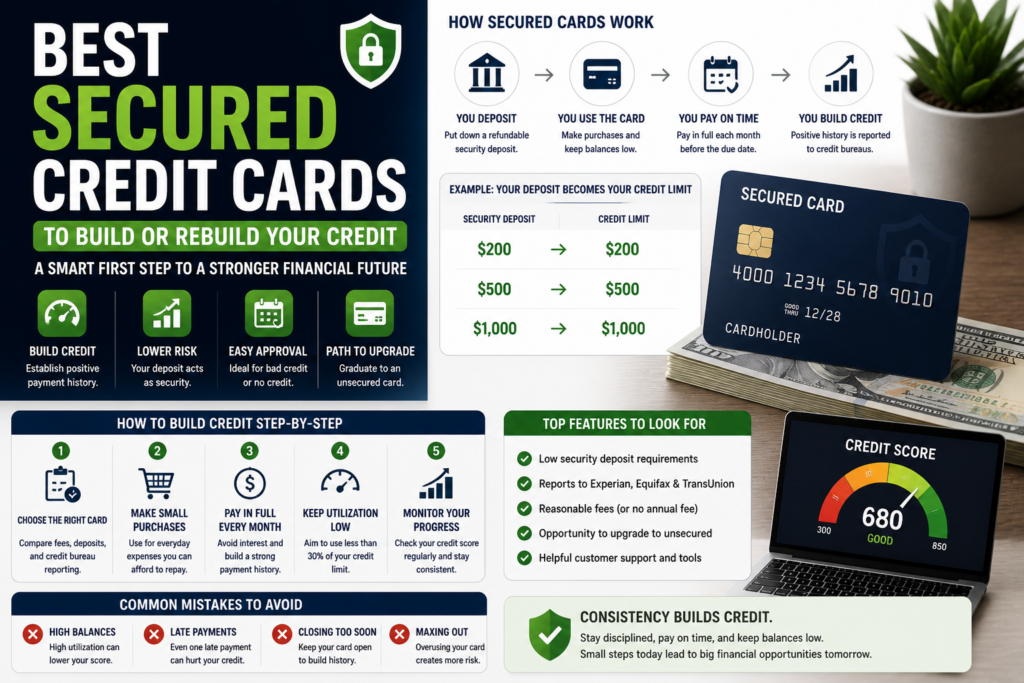
Best Secured Credit Cards to Build or Rebuild Your Credit
If you have bad credit or no credit history, getting approved for a traditional credit card can be difficult. That’s where secured credit cards come in. These cards are specifically designed to help people build or rebuild their credit profile in a controlled and responsible way.
In my experience helping individuals improve their credit scores, secured credit cards are often one of the most effective first steps toward rebuilding financial credibility. When used correctly, they can help establish positive payment history and gradually increase your credit score.
This guide explains how secured credit cards work, which types are best, and how to use them strategically to improve your credit score.
What Is a Secured Credit Card?
A secured credit card is a type of credit card that requires a refundable security deposit. This deposit acts as collateral for the lender and usually becomes your credit limit.
For example:
| Security Deposit | Credit Limit |
|---|---|
| $200 | $200 |
| $500 | $500 |
| $1,000 | $1,000 |
The deposit reduces the lender’s risk, which makes secured cards easier to obtain for people with low or limited credit history.
Many financial institutions that issue secured cards report activity to credit bureaus such as:
- Experian
- Equifax
- TransUnion
When you use the card responsibly, these agencies record your positive payment behavior, which can help increase your credit score over time.
How Secured Credit Cards Help Build Credit
Secured credit cards help improve credit because they influence several important credit score factors.
Payment History
Payment history is the most important factor in most scoring models developed by FICO.
Making consistent on-time payments demonstrates reliability to lenders.
In my experience working with people trying to rebuild credit, simply paying a secured card on time every month can lead to noticeable improvements within a few months.
Credit Utilization
Credit utilization measures how much of your available credit you use.
Example:
- Credit limit: $300
- Balance: $90
- Utilization: 30%
Experts typically recommend keeping utilization below 30%, and ideally under 10%.
Lower utilization signals responsible credit management.
Length of Credit History
Keeping your secured card open for a long period helps extend your credit history, another factor that influences credit scores.
Over time, a well-managed secured card can become the foundation of a strong credit profile.
Best Secured Credit Cards in 2026
While many lenders offer secured cards, the best options typically share several features:
- reasonable deposit requirements
- reporting to major credit bureaus
- potential to upgrade to unsecured cards
Here are some common categories of strong secured cards.
Cards With Low Security Deposits
Some secured credit cards allow deposits starting as low as $200 or $300, making them accessible to people who are just beginning to rebuild credit.
Lower deposits make it easier to start building credit without committing large amounts of money upfront.
Cards That Upgrade to Unsecured
Some secured cards automatically upgrade to traditional unsecured cards after several months of responsible use.
Benefits of upgrade programs include:
- returning your deposit
- increasing credit limits
- improving credit profile strength
In many cases, I’ve seen borrowers transition from secured cards to unsecured cards within 6 to 12 months of consistent payments.
Cards Designed for Bad Credit
Certain secured cards are specifically designed for individuals with:
- poor credit history
- previous financial setbacks
- limited credit background
These cards focus on providing accessible credit-building opportunities rather than strict approval standards.
How to Choose the Best Secured Credit Card
Not all secured credit cards are the same. When evaluating options, consider the following factors.
Security Deposit Requirements
Most deposits range between $200 and $500, though some cards allow higher limits with larger deposits.
Annual Fees
Some secured cards charge annual fees, while others do not. Lower fees help maximize the financial benefit of the card.
Credit Reporting
A key feature is reporting to the three major credit bureaus. Without this reporting, the card will not help improve your credit score.
Graduation Programs
Cards that eventually upgrade to unsecured credit cards provide long-term value.
This allows you to keep building credit without needing to apply for a new account.
Step-by-Step: How to Build Credit With a Secured Card
Using a secured credit card effectively requires a clear strategy.
1. Choose the Right Card
Select a card with reasonable fees and strong reporting practices.
2. Make Small Purchases
Use the card for manageable expenses such as:
- groceries
- gas
- subscriptions
This keeps balances easy to repay.
3. Pay the Balance in Full
Always pay the full balance before the due date to avoid interest charges.
4. Keep Utilization Low
Try to keep balances below 30% of your credit limit.
For example:
| Credit Limit | Ideal Balance |
|---|---|
| $300 | $30–$90 |
| $500 | $50–$150 |
5. Monitor Your Credit Progress
Track your credit score regularly to see how your responsible use impacts your financial profile.
Many people begin seeing improvement within three to six months.
Common Mistakes When Using Secured Credit Cards
Even though secured cards are designed to help build credit, certain mistakes can limit their effectiveness.
Carrying High Balances
High utilization can negatively impact your credit score.
Missing Payments
Late payments can damage credit history and offset the benefits of using the card.
Closing the Card Too Early
Keeping the card open helps build a longer credit history, which benefits your score.
In my experience advising individuals with low credit scores, patience is essential. Responsible use over time creates the strongest results.
How Long It Takes to Build Credit With a Secured Card
Credit improvement timelines vary, but many people see progress within several months.
Typical timeline:
| Timeframe | Possible Credit Changes |
|---|---|
| 3 months | Initial score improvement |
| 6 months | Stronger credit profile |
| 12 months | Eligibility for better credit cards |
Consistency matters more than speed. Responsible use over time creates lasting credit improvements.
Final Tips to Improve Your Credit Score Faster
Secured credit cards work best when combined with smart financial habits.
Helpful strategies include:
- paying all bills on time
- avoiding excessive debt
- monitoring credit reports regularly
- keeping balances low
With discipline and consistent financial behavior, a secured credit card can become a powerful tool for building a strong and stable credit profile.
FAQs
What is the best secured credit card to build credit?
The best secured credit cards report to all three credit bureaus, have low fees, and offer opportunities to upgrade to unsecured cards.
Do secured credit cards improve credit scores?
Yes. When used responsibly, secured cards can improve credit scores by building payment history and lowering credit utilization.
How long should you keep a secured credit card?
Keeping a secured card for at least 6–12 months often helps establish a positive credit record.
Can secured credit cards become unsecured?
Some secured cards automatically upgrade to unsecured cards after consistent on-time payments.