
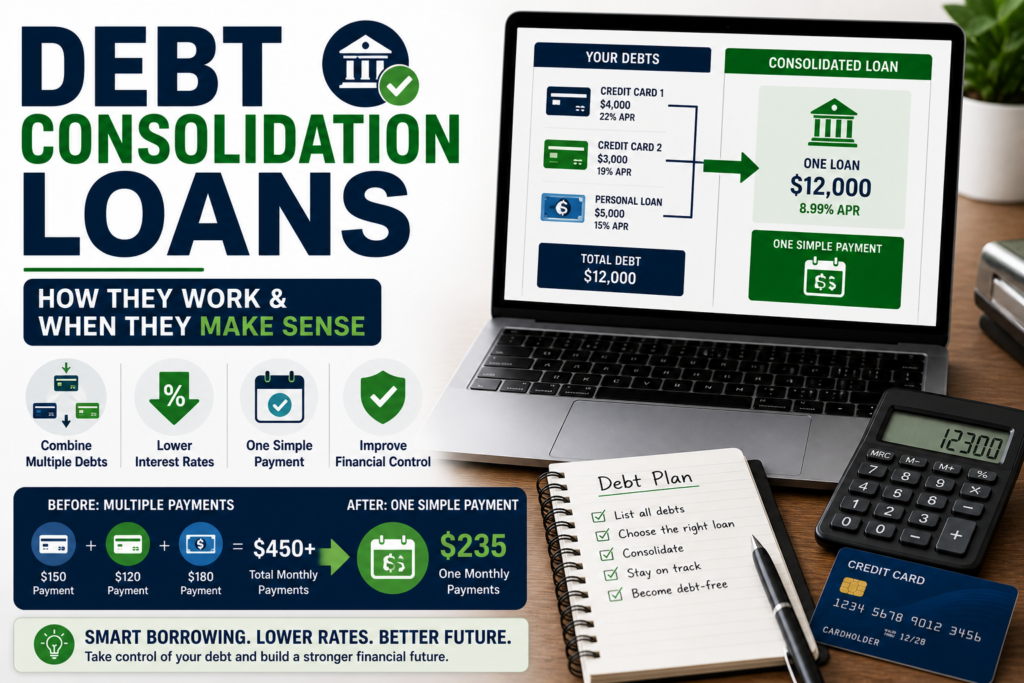
Debt Consolidation Loans: How They Work and When They Make Sense
Managing multiple debts can quickly become overwhelming. Credit cards, personal loans, and other financial obligations often come with different interest rates and payment dates. For many people, debt consolidation loans offer a practical way to simplify finances and regain control.
In my experience helping individuals manage high levels of debt, one of the most common problems is not necessarily the amount owed, but the complexity of managing several payments at once. Debt consolidation can simplify that situation by turning multiple debts into one structured repayment plan.
This guide explains how debt consolidation loans work, their benefits, risks, and how to decide if they are the right option for you.
What Are Debt Consolidation Loans?
A debt consolidation loan is a type of loan used to combine multiple debts into a single new loan. Instead of paying several creditors each month, you make one payment to a single lender.
Most people use consolidation loans to combine:
- Credit card balances
- Personal loans
- Medical bills
- Payday loans
- Store credit accounts
The goal is usually to reduce interest rates, simplify payments, or lower the monthly financial burden.
In many cases, the new loan offers better terms than the existing debts, making repayment more manageable.
How Debt Consolidation Loans Work
Debt consolidation is fairly straightforward, but understanding the process helps you avoid common mistakes.
Combining Multiple Debts Into One Loan
When you receive a consolidation loan, the funds are typically used to pay off your existing debts.
For example:
| Debt Type | Balance | Interest Rate |
|---|---|---|
| Credit Card 1 | $4,000 | 22% |
| Credit Card 2 | $3,000 | 19% |
| Personal Loan | $5,000 | 15% |
Total debt: $12,000
With consolidation, a lender might issue a $12,000 loan with a lower interest rate, allowing you to replace three payments with one.
Lower Interest Rates
One of the main advantages of consolidation is securing a lower interest rate than your current debts.
High-interest credit cards often charge 18%–30% APR, while consolidation loans may offer lower rates depending on your credit profile.
In my experience working with borrowers, reducing interest is often the single biggest factor that accelerates debt payoff.
Simplifying Monthly Payments
Another major benefit is simplicity.
Instead of tracking multiple due dates and payment amounts, you only need to manage one monthly payment. This reduces the risk of missed payments, which can negatively impact your credit score.
Benefits of Debt Consolidation Loans
Debt consolidation can offer several advantages when used correctly.
Easier Financial Management
One loan and one payment makes budgeting significantly easier.
Many people struggling with debt are not irresponsible—they simply lose track of multiple financial obligations.
Lower Monthly Payments
Depending on the loan terms, consolidation can reduce monthly payments by:
- lowering the interest rate
- extending the repayment period
This can create more breathing room in your monthly budget.
Potential Credit Score Improvement
When used responsibly, debt consolidation may help improve your credit score over time.
Benefits include:
- lower credit utilization
- consistent payment history
- fewer missed payments
However, the improvement usually happens gradually over several months.
Potential Risks and Downsides
While consolidation can be helpful, it is not a perfect solution for everyone.
Longer Repayment Period
Lower monthly payments often come with longer loan terms, which can increase the total interest paid over time.
Qualification Requirements
Not everyone qualifies for favorable consolidation loans.
Lenders typically evaluate:
- credit score
- income stability
- debt-to-income ratio
Borrowers with lower credit scores may receive higher interest rates.
Risk of Repeating the Debt Cycle
One mistake I frequently see is people consolidating their credit cards and then accumulating new credit card balances again.
Without addressing spending habits, consolidation can become a temporary fix rather than a long-term solution.
Who Should Consider a Debt Consolidation Loan
Debt consolidation may be a good option for people who:
- Have multiple high-interest debts
- Want to simplify their monthly payments
- Can qualify for lower interest rates
- Have stable income to support repayment
It may be less effective for people with extremely high debt relative to income, where other debt relief strategies may be necessary.
How to Qualify for a Debt Consolidation Loan
Lenders evaluate several factors before approving a consolidation loan.
Credit Score
Higher credit scores generally qualify for better interest rates.
While requirements vary, many lenders prefer scores above 620–660.
Debt-to-Income Ratio
This ratio measures how much of your monthly income goes toward debt payments.
Lower ratios indicate lower financial risk for lenders.
Income Stability
Stable income reassures lenders that you can make consistent payments.
Borrowers with regular employment or reliable income sources often have better approval chances.
Step-by-Step: How to Get a Debt Consolidation Loan
1. Review Your Debts
Start by listing:
- balances
- interest rates
- monthly payments
This helps determine whether consolidation would actually save money.
2. Check Your Credit Score
Knowing your credit score helps you estimate the interest rates you may qualify for.
3. Compare Lenders
Different lenders offer different loan terms. Compare:
- interest rates
- repayment periods
- fees
- eligibility requirements
Taking time to compare options can significantly affect long-term costs.
4. Apply for the Loan
Once you choose a lender, submit an application with financial information such as:
- income verification
- employment details
- current debt obligations
5. Pay Off Existing Debts
After approval, the loan funds are typically used to pay off your existing debts, leaving you with only one loan to repay.
Common Mistakes People Make With Debt Consolidation
Through years of observing debt situations, certain mistakes appear repeatedly.
Consolidating Without Changing Spending Habits
If spending behavior remains the same, debt may accumulate again.
Ignoring Loan Fees
Some consolidation loans include:
- origination fees
- balance transfer fees
- early repayment penalties
These costs should be considered when calculating savings.
Choosing Longer Loan Terms
Longer repayment terms may reduce monthly payments but increase total interest paid.
Alternatives to Debt Consolidation Loans
Debt consolidation is only one approach to managing debt.
Other options include:
Debt Management Plans
Structured repayment plans organized by financial counseling services.
Balance Transfer Credit Cards
Credit cards offering temporary 0% interest periods to pay down balances faster.
Debt Settlement Programs
Negotiating with creditors to reduce the total debt owed.
Each option has different advantages depending on the individual’s financial situation.
Final Tips to Become Debt-Free Faster
Debt consolidation works best when combined with responsible financial habits.
Some strategies that help accelerate debt repayment include:
- creating a realistic budget
- prioritizing high-interest debts
- avoiding new unnecessary credit
- building an emergency savings fund
Over time, these habits help transform consolidation from a short-term fix into a long-term financial improvement strategy.
FAQs
Are debt consolidation loans a good idea?
They can be helpful if they reduce interest rates, simplify payments, and fit within a realistic repayment plan.
Do debt consolidation loans hurt your credit score?
Applying for a loan may cause a small temporary drop due to a credit inquiry, but consistent payments can improve credit over time.
What credit score is needed for debt consolidation?
Many lenders prefer scores above 620, although some options exist for lower scores.
Can you consolidate debt with bad credit?
Yes, but interest rates may be higher. Some borrowers use secured loans or alternative debt relief programs.