
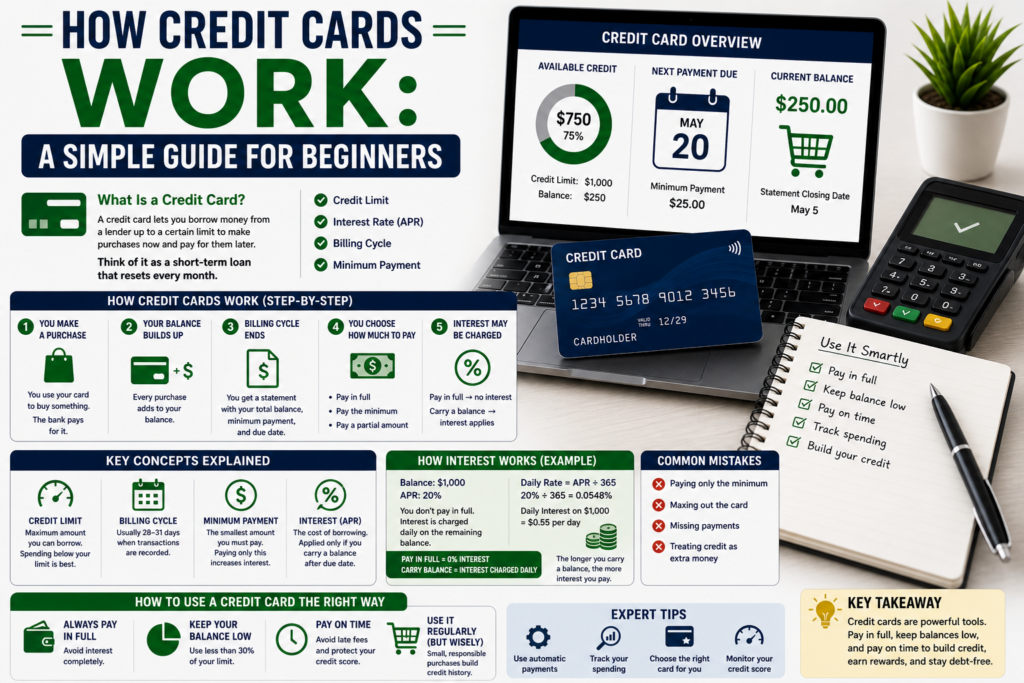
How Credit Cards Work: A Simple Guide for Beginners
Credit cards are one of the most common financial tools, yet many people don’t fully understand how they work. Used correctly, they can help you build credit, earn rewards, and manage expenses. Used incorrectly, they can lead to debt and financial stress.
In my experience explaining credit cards to beginners, the biggest confusion comes from how interest works and when you actually have to pay it. Once you understand the basics, credit cards become much easier—and safer—to use.
What Is a Credit Card?
A credit card is a financial tool that allows you to borrow money from a lender up to a certain limit to make purchases.
Instead of using your own money (like with a debit card), you’re using the bank’s money—and you agree to repay it later.
Each credit card comes with:
- a credit limit (maximum amount you can borrow)
- an interest rate (APR)
- a billing cycle
- a minimum payment requirement
Think of a credit card as a short-term loan that resets every month.
How Credit Cards Work (Step-by-Step)
Understanding the process step by step makes everything much clearer.
1. You Make a Purchase
You use your credit card to buy something:
- groceries
- online shopping
- subscriptions
The bank pays for it, and the amount is added to your balance.
2. Your Balance Builds Up
Every time you use the card, your balance increases.
Example:
- Credit limit: $1,000
- You spend: $200 → Balance = $200
3. Billing Cycle Ends
A billing cycle usually lasts around 30 days.
At the end, the bank generates a statement showing:
- total balance
- minimum payment
- due date
4. You Choose How Much to Pay
You have three main options:
- pay the full balance
- pay the minimum
- pay a partial amount
This is where many people make mistakes.
5. Interest May Be Charged
- If you pay in full → no interest
- If you carry a balance → interest applies
In my experience, this is the most misunderstood part. Many people think credit cards always charge interest—but they don’t if used correctly.
Credit Card Key Concepts Explained
Understanding these key terms is essential.
Credit Limit
Your credit limit is the maximum amount you can borrow.
Example:
- Limit: $500
- Spending: $250
- Remaining credit: $250
Billing Cycle
The billing cycle is the period during which your transactions are recorded.
Typically:
- lasts 28–31 days
- ends with a statement
Minimum Payment
This is the smallest amount you must pay to keep your account in good standing.
However, paying only the minimum:
- increases interest
- keeps you in debt longer
In my experience, people who only pay the minimum often struggle to get out of debt.
Interest (APR)
APR (Annual Percentage Rate) is the cost of borrowing money.
It only applies if you carry a balance after the due date.
How Credit Card Interest Works
Let’s simplify this with an example.
Scenario:
- Balance: $1,000
- APR: 20%
- You don’t pay in full
The bank starts charging interest on the remaining balance.
👉 Key takeaway:
- Pay in full → 0% interest
- Carry balance → interest charged daily
This is why credit cards can either be free tools or expensive debt, depending on how you use them.
How to Use a Credit Card the Right Way
Using a credit card responsibly is simple if you follow a few rules.
Always Pay in Full
This avoids interest completely.
Keep Your Balance Low
Experts recommend using less than 30% of your credit limit.
Example:
| Credit Limit | Ideal Usage |
|---|---|
| $500 | $50–$150 |
| $1,000 | $100–$300 |
Pay On Time
Late payments can:
- damage your credit score
- trigger fees
Use It Regularly (But Wisely)
Small, manageable purchases help build credit history.
In my experience helping beginners, people who use their card for simple monthly expenses and pay it off immediately get the best results.
Common Mistakes Beginners Make
Avoid these mistakes to protect your finances.
Paying Only the Minimum
This leads to long-term debt and high interest costs.
Maxing Out the Card
High usage negatively affects your credit score.
Missing Payments
Even one late payment can hurt your credit profile.
Treating Credit as Extra Money
A credit card is not extra income—it’s borrowed money.
This is one of the most common mistakes I see when people start using credit cards.
Expert Tips to Use Credit Cards Smartly
To get the most benefit from your credit card:
Use Automatic Payments
Helps avoid missed payments.
Track Your Spending
Prevents overspending.
Choose the Right Card
Match rewards to your lifestyle.
Monitor Your Credit Score
Track your progress over time.
From my experience, people who treat credit cards as a tool for convenience—not borrowing—build the strongest financial habits.
Conclusion
Credit cards are powerful financial tools when used correctly. They allow you to borrow money, build credit, and earn rewards—but they also require discipline.
The key to using credit cards successfully is simple:
- pay your balance in full
- keep your usage low
- never miss payments
Once you understand how credit cards work, you can use them to your advantage and avoid the common pitfalls that lead to debt.
FAQs
Do you pay interest every month?
No. You only pay interest if you carry a balance after the due date.
What happens if I only pay the minimum?
You will be charged interest on the remaining balance and it will take longer to repay your debt.
Is it good to use a credit card every day?
Yes, as long as you keep your balance low and pay it off in full.
Do credit cards help build credit?
Yes. Responsible use improves your payment history and credit score.