
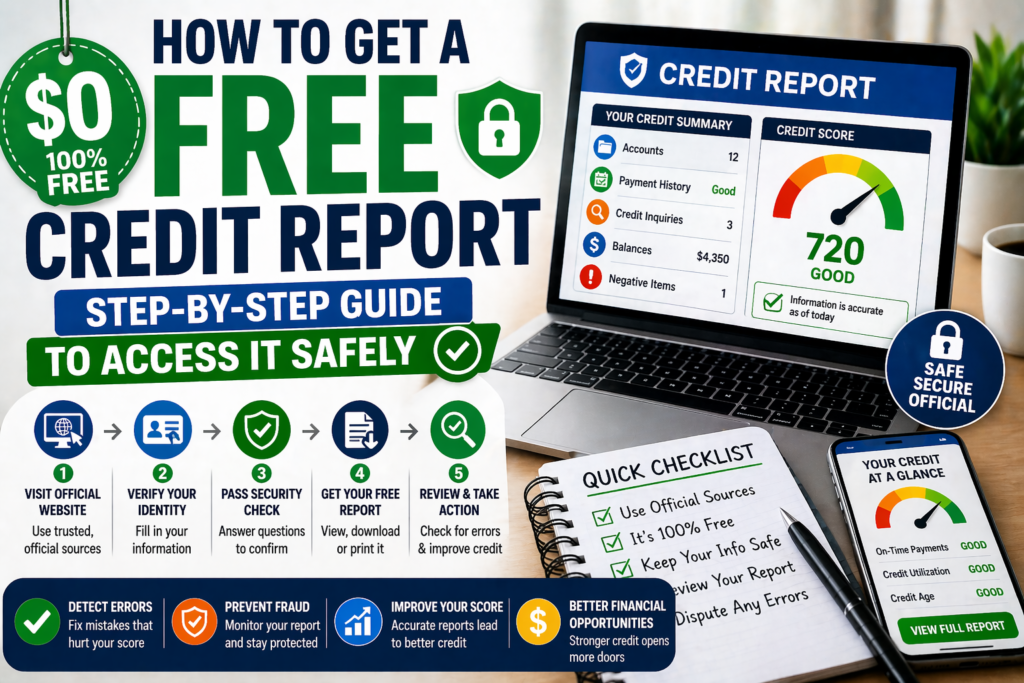
How to Get a Free Credit Report: Step-by-Step Guide to Access It Safely
Getting your credit report for free is easier than most people think—but many still end up paying for it or using the wrong websites.
In my experience helping people access their credit reports, one of the most common mistakes is not knowing that you’re legally entitled to a free credit report from official sources. Instead, many people accidentally sign up for paid services or fall for misleading offers.
The good news is that once you know the correct process, getting your credit report is quick, safe, and completely free.
What Is a Free Credit Report?
A free credit report is a copy of your credit history that you can access without paying.
It includes:
- your credit accounts
- payment history
- balances
- credit inquiries
- negative items
👉 Important:
This is different from your credit score, which may or may not be included.
Where to Get a Free Credit Report (Official Sources)
The safest way to get your report is through official channels.
1. Official Annual Credit Report Website
In many countries (especially the U.S.), you are entitled to free reports from major credit bureaus.
Key features:
- free access
- no hidden fees
- official and secure
👉 This is the most reliable source.
2. Government Consumer Protection Websites
Government agencies provide guidance and links to official services.
Why use them:
- verified information
- protection against scams
3. Some Financial Apps and Banks
Certain apps and banks offer free credit reports or summaries.
Important:
- verify legitimacy
- check if full report is included
In my experience, official sources are always the safest option.
Step-by-Step: How to Get Your Free Credit Report
Step 1 — Use an Official Website
Go directly to the official credit report provider.
👉 Avoid clicking ads or third-party links.
Step 2 — Enter Your Personal Information
You’ll need to provide:
- name
- address
- date of birth
- identification details
Step 3 — Verify Your Identity
You may be asked questions like:
- previous addresses
- loan details
- account history
👉 This is to protect your information.
Step 4 — Access Your Report
Once verified, you can:
- view your report online
- download it
- print it
Step 5 — Review Your Report Carefully
Check for:
- errors
- unknown accounts
- incorrect balances
In my experience, this is the step most people skip—but it’s the most important.
How Often Can You Get a Free Credit Report?
This depends on the country and provider.
Typical rules:
- at least once per year per bureau
- sometimes more frequently (depending on regulations)
👉 Some services allow more frequent access.
Common Mistakes to Avoid
Using Unofficial Websites
Many sites look legitimate but charge hidden fees.
Paying for Something That Is Free
You don’t need to pay for basic credit reports.
Ignoring Your Report
Getting it is not enough—you must review it.
Entering Data on Unsafe Sites
Always verify the website before sharing personal information.
In my experience, most issues come from using the wrong platforms.
How to Know If a Site Is Legitimate
Check for:
- official domain names
- secure connection (HTTPS)
- no hidden payment requirements
👉 If a site asks for payment upfront, be cautious.
What to Do After Getting Your Credit Report
1. Check for Errors
Look for:
- incorrect accounts
- wrong payment history
- outdated information
2. Dispute Inaccuracies
If you find errors:
- contact the credit bureau
- provide supporting evidence
3. Monitor Your Credit Regularly
Track changes over time.
4. Use It to Improve Your Credit
Take action based on what you see.
In my experience, people who actively use their credit report improve their financial situation much faster.
Real Example: Getting a Free Credit Report
Scenario:
- user wants to check credit status
Action:
- visits official site
- verifies identity
- downloads report
Result:
- identifies incorrect late payment
- disputes error
- improves credit score
👉 This is a very common and effective process.
Why Checking Your Credit Report Is Important
Benefits:
- detect errors
- prevent fraud
- improve your credit score
- make better financial decisions
👉 Your credit report is one of your most important financial tools.
Expert Tips for Getting Your Credit Report Safely
Always Use Official Sources
Avoid third-party traps.
Never Pay for Basic Reports
They are available for free.
Review Your Report Carefully
Don’t just download it.
Check Regularly
Stay updated on your credit status.
Protect Your Information
Use secure websites only.
From my experience, following these tips prevents most problems.
Conclusion
Getting a free credit report is simple—but only if you know where to go and what to avoid.
The key takeaways:
- you are entitled to a free credit report
- official sources are the safest option
- avoid scams and paid services
- reviewing your report is essential
Once you understand the process, you can access your credit report confidently and use it to improve your financial future.
FAQs
Can I really get my credit report for free?
Yes, from official sources and credit bureaus.
How often can I check my report?
Typically at least once per year, sometimes more.
Do I need to pay for my credit score?
Not always—some services provide it for free.
Is it safe to check my credit report online?
Yes, if you use official and secure websites.